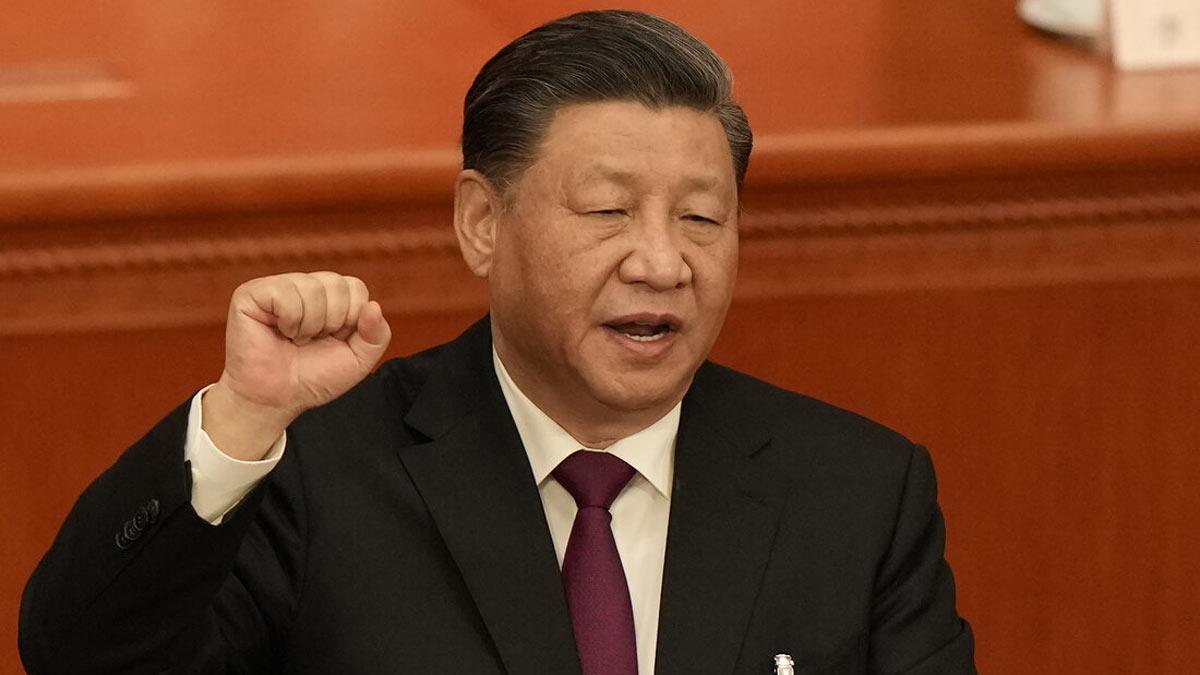


Lhasa, the holy pilgrimage city, was temporarily recreated to look like Beijing as the Patola parade ground was converted into a scaled-down Tiananmen Square during Chinese President Xi Jinping's recent visit to central Tibet, a report published Wednesday stated. The authorities closely monitored the people who flocked to the occasion.
Throughout the visit, Xi emphasized Beijing's commitment to boosting Tibet's development with "Chinese characteristics."
A report by Stockholm-based Institute for Security and Development Policy (ISDP) indicated that Chinese leaders wanted to display an image of success in their attempts to win over the Tibetans through grand patriotic gestures. The report went on to counter that these efforts seemed forced and deceptive, citing the rigid framework of China's governance.
At the Potala Palace, where he was welcomed with a grand pageantry: a military band played, Tibetans waved red flags and presented traditional "khatag scarves." The Chinese flag was raised, the national anthem blared, and the crowd that had gathered sang together, all captured by cameras in speedy succession.
"These outbursts of spontaneous joy at seeing the Core Leader remind us that China sees Tibetans as backward, simple folk, who break into joyful dancing just like that. Nothing to do with choreography and repeated rehearsals. This spectacular enlisted 20,000 participants, trained to simulate spontaneity on cue. At no other time would the party-state allow 20,000 Tibetans to gather on the streets and square immediately below the Potala; any genuinely popular gathering would be swiftly declared a threat to national security,” wrote Gabriel Lafitte, who spent years living with Tibetans, in exile and in Tibet, wrote in ISDP.
Such orders, which have been published annually, detail how central Tibetan residents should act. Each new order has tried to be more specific each and added longer and more tedious consequences for failing to comply.
“Do Tibetans believe China is building in Tibet a united, prosperous, civilized, harmonious, and beautiful new socialist modernity? Does that fit their daily experience? This is popularly known as gaslighting, an unending campaign of controlling the minds and thoughts of others,” said the Australia-based writer.
"China’s reliance on top-level design to translate its frontier construction theory into a menu of actions has resulted in a dead end. Far from master planning Tibet’s transition into embracing a new identity, as loyal Chinese citizens, the counterproductive outcome of intensifying pressure is the deepening of Tibetan dismay at the relentless intrusion of China’s slogan jargon into every aspect of life. Tibetans feel stifled, asphyxiated, cancelled by the tide of propaganda memes they must memorize, repeat, and perform, whenever required," noted Lafitte who researches the impacts of Chinese policies on the Tibetan Plateau and regularly trains young Tibetan professional environmentalists and advocates.
Read also| Danish PM Condemns US Meddling in Greenland, Calls It 'Unacceptable'