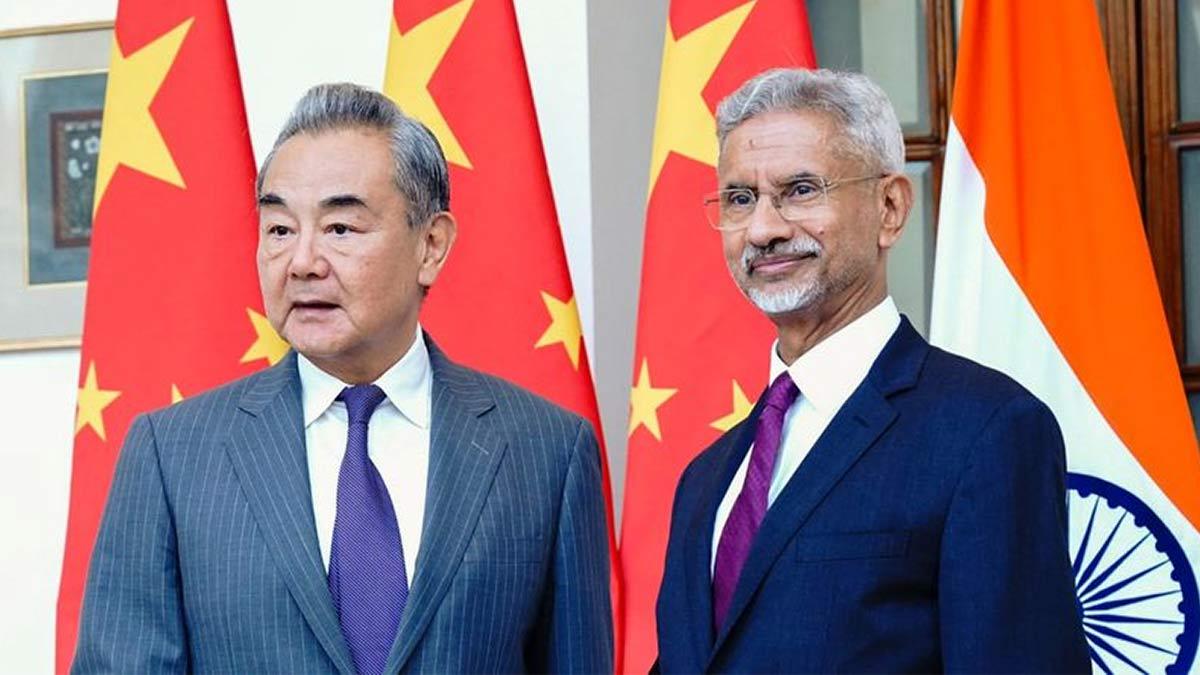


India and China have achieved significant advances in addressing their long-standing border dispute as both agreed to initiate work on demarcating less disputed sections of the border and ultimately lead towards permanent demarcation. This was achieved during the 24th round of Special Representative-level discussions on Tuesday between National Security Advisor Ajit Doval and Chinese Foreign Minister Wang Yi.
Though officials would not share concrete details, both sides are said to have identified sectors in the three border areas that have fewer disputes. The process will be initiated through the establishment of a technical expert group under the Working Mechanism for Consultation and Coordination on India-China Border Affairs (WMCC), which will be led by a MEA joint secretary. This subgroup will initially demarcate relatively friction-less stretches, next perform delimitation of these tracts, and ultimately proceed towards physical demarcation by erecting boundary pillars.
This step-by-step, "piecemeal" strategy is intended to establish confidence between the two nations as opposed to resolving the entire boundary problem all at once. It also stands for a wider attempt at consolidating achievements since the completion of disengagement in areas of the Eastern Sector after the May 2020 clashes.
Though the issue of buffer zones in disputed territories is not yet settled, both the armies have decided to phase in a "non-offensive" stance along Ladakh and other sensitive sections. This involves withdrawing tanks, rockets, and heavy guns from forward areas to reduce the perception of any threat. Military analysts point out that even though Ladakh's high mountains provide India natural defensive cover, the Chinese side's Tibetan plateau provides for quicker mobilization of the PLA—making de-escalation imperative for long-term stability.
The larger objective for both parties is to return to the pre-April 2020 period, when border tensions had not dominated bilateral interaction. India continues to be sensitive, though, about the rising strategic presence of Beijing in Pakistan and the broader subcontinent.
The fresh momentum derives in part from the October 23, 2024, meeting of Prime Minister Narendra Modi and President Xi Jinping that opened the door to this new phase of dialogue. With Modi and Xi set to meet for the second time at the SCO summit in Tianjin on August 31, the stage seems to be set for a calibrated reset of relations with pragmatism and mutual sensitivities as an anchor.
Read also| NSA Doval to Wang Yi: India-China Relations Improving as Border Stays Peaceful