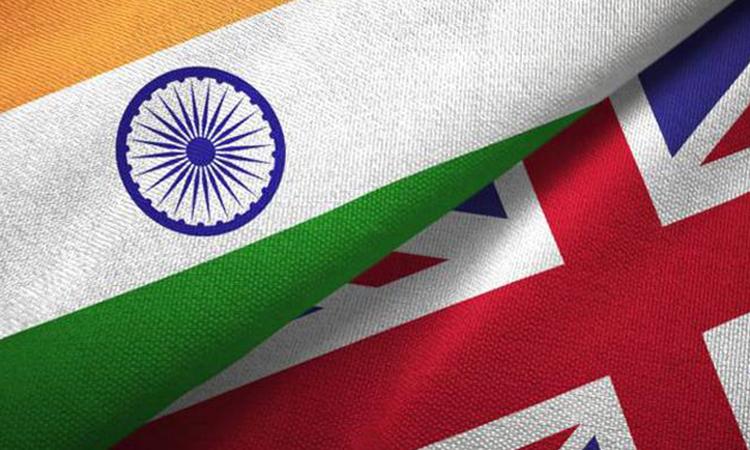


A major British think tank has a word of caution for the British government as far as developing relations with India is concerned.
Calling for a “shift in strategic focus”, the think tank named "Chatham House" cautioned that the UK should have more realistic goals about developing deeper ties with India.
In its report titled “Global Britain, Global Broker”, the think tank clubbed India with China, Saudi Arabia and Turkey called them the 'difficult four'.
The new report questions whether the UK would be able to avoid losing influence in the world as “Britain has remained influential because it is one of the few countries capable of combining its diverse national assets — diplomatic, military, intelligence and humanitarian — to pursue its interests beyond its shores.”
“India’s importance to the UK is inescapable. … But it should be obvious by now that the idea of a deeper relationship with India always promises more than it can deliver. The legacy of British colonial rule consistently curdles the relationship. In contrast, the US has become the most important strategic partner for India, as recent US administrations have intensified their bilateral security relations, putting the UK in the shade,” says the report.
It also states that India’s “complex, fragmented domestic politics have made it one of the countries most resistant to open trade and foreign investment.” In addition, “the overt Hindu nationalism of the ruling Bhartiya Janta Party is weakening the rights of Muslims & other minority religious groups, leading to a chorus of concern that intolerant majoritarianism is replacing the vision of a secular, democratic India bequeathed by Nehru.”
The report criticizes Boris Johnson’s initiative of setting up a D10 club of democratic countries, and particularly, including India in it as India has a long and consistent record of resisting being corralled into a ‘Western’ camp. It led the Non-Aligned Movement during the Cold War and, in 2017, India formally joined the China-and Russia-led Shanghai Cooperation Organisation.”
The report aslo points out that despite border clashes with China, India did not join the group of countries that criticized China at the UN in July 2019 over human rights violations in Xinjiang.
"India has also been muted in its criticism of the passage of the new national security law in Hong Kong. With Indian domestic politics also having entered a more ethno-nationalist phase, as noted earlier, a D10 might end up functioning as a D9 at some point in the future, with all the damaging knock-on effects this would have on the UK’s relations with India,” it added.