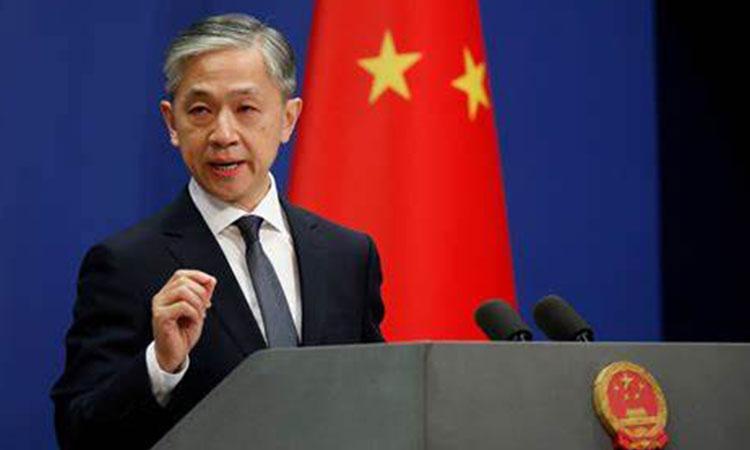


India on Wednesday surpassed China to become the world’s most populous country, according to the United Nations. While China had held this title for decades, a spokesperson for the Chinese Foreign Ministry, Wang Wenbin, took a dig at India, saying that when assessing a country’s demographic dividend, it is crucial to look at quality as well as size.
Responding to media queries about India overtaking China in population, Wenbin emphasized that talent resources matter most. He explained that although size matters, what matters more is the quality of a country's talent resources. He cited statistics, stating that nearly 900 million of China's 1.4 billion population are of working age and have received an average of 10.9 years of education.
“When assessing a country’s demographic dividend, we need to look at not just its size but also its quality. Size matters, but what matters more is talent resources," Wang Wenbin said.
"Nearly 900 million of the 1.4 billion Chinese are of working age and on average have received 10.9 years of education,” he added.
Also read | China picks holes in Gwadar port security revealing rift with Pakistan on CPEC
The United Nations world population dashboard confirmed that India's population had reached 1428.6 million people, surpassing China's population of 1425.7 million. This marks the first time since 1950 that India has topped the UN's list of most populated countries.
The United States occupies the third spot with an estimated population of 340 million people.
Wenbin also spoke about China's workforce, noting that the average length of education for recent entrants has increased to 14 years. This is due to China's national strategy to address population ageing, which includes a third-child policy and measures to tackle demographic changes.
China's spokesperson emphasized that China's driving force for development remains strong. China's population had shrank for the first time since 1960 in the previous year.
Also read | India overtakes China to become most populous country: UN report
It is worth noting that in 2016, Beijing ended its "one-child policy," which had been in place since the 1980s due to overpopulation concerns. The policy had been implemented to curb the country's population growth and limit the strain on resources. However, in 2021, China began allowing couples to have up to three children as part of a new population strategy aimed at addressing demographic changes and aging.
India last conducted a census in 2011, and there are no current official figures on the exact size of its population. The once-every-ten-year census, which was supposed to take place in 2021, was delayed due to the Covid-19 pandemic.