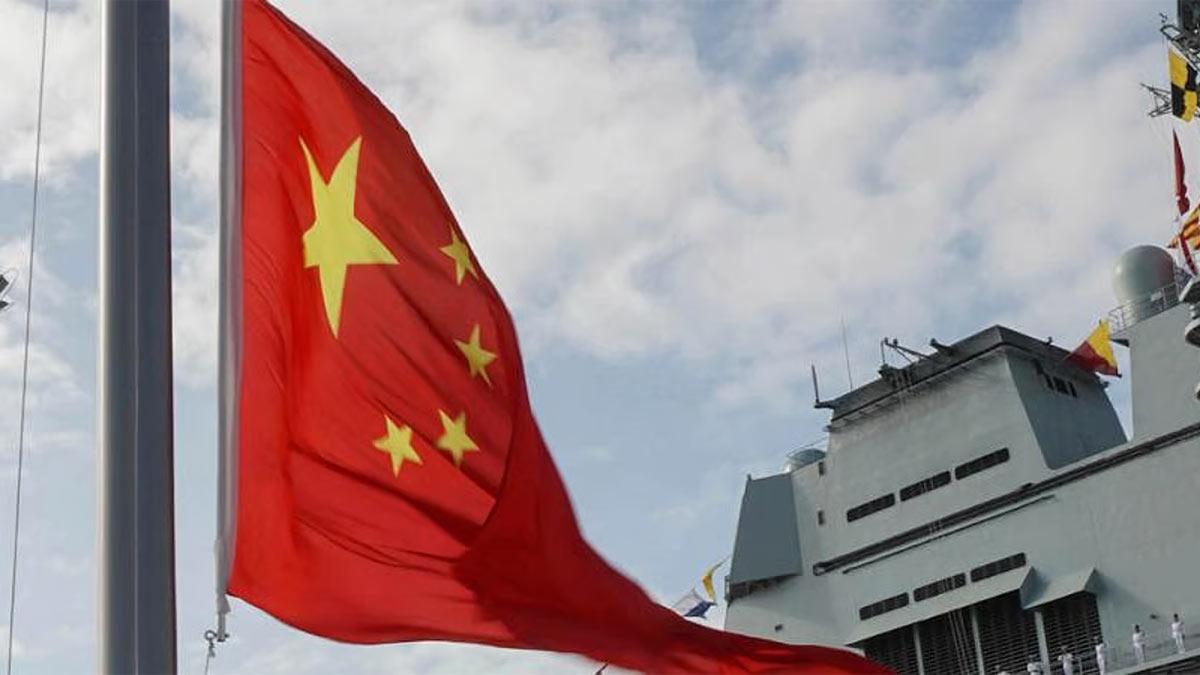


Beijing's 'One China' policy has long been not merely a diplomatic position but now a mechanism to remake globalisation, requiring not only acceptance but adherence to its norms, a report released on Monday said.
Referencing the Taipei Times, the report stated that in his recent trip to New Delhi, Chinese Foreign Minister Wang Yi claimed that India recognized Taiwan as being part of China. India explained that it has not changed its stance and, like most countries, it continues to engage in economic, cultural, and technological relations with Taiwan.
"It reaffirmed that India continues to recognise Beijing as the government of China, consistent with the policy adopted in 1949. Secondly, it explicitly rejected the expanded interpretation that Beijing seeks to attach to ‘One China’. By pointing out that even Beijing engages with Taipei in similar domains, New Delhi exposed the overreach in China’s narrative. The line was sharply drawn; recognition does not equate to subordination," wrote Lin Hsiao-chen ,an Assistant Professor at Taiwan’s Tamkang University’s Graduate Institute of International Affairs and Strategic Studies in Taipei Times.
“China’s strategy has unfolded gradually yet deliberately. What began as a question of representation has progressively transformed into conditionality embedded in market access. States seeking deeper economic ties with China have increasingly been required to accommodate Beijing’s position on Taiwan as the price of entry,” he added.
The report underscored instances of Beijing's coercive strategy. Lithuania, for example, was subjected to punitive commercial restrictions after it permitted a Taiwanese representative office in the name "Taiwan." Likewise, the Czech Republic was put on notice of diminished business opportunities after it interacted with Taiwanese politicians, whereas various African countries were threatened with slashes in financing and infrastructure assistance should they accept Taipei assistance or receive official visits.
Combined, these cases highlight how 'One China' has moved from diplomatic acceptance to a tool of structural power, coercing governments into centering their foreign policy positions on Beijing in the pursuit of access to the Chinese market.
As per the report, this evolution has been gradual and, to a large extent, non-confrontational. Through time, 'One China' evolved from diplomatic tenet to precondition of trade and is now a template for influencing international norms. This has led to a hardened version — a "super 'One China'" — that goes beyond sovereignty to vesting Beijing with influence over the terms of global interaction.
“Against this backdrop, India’s intervention gains even greater significance. The dispute over Wang’s claim was not about semantics, but about sovereignty in rulemaking. India drew a decisive line. It would continue to uphold its 1949 recognition of the PRC, but it would not concede its strategic autonomy by endorsing Beijing’s expansion of ‘One China’, the report noted.
Read also| 'It's Getting Late': Trump Claims India Has 'Offered To Cut Tariffs To Nothing'