
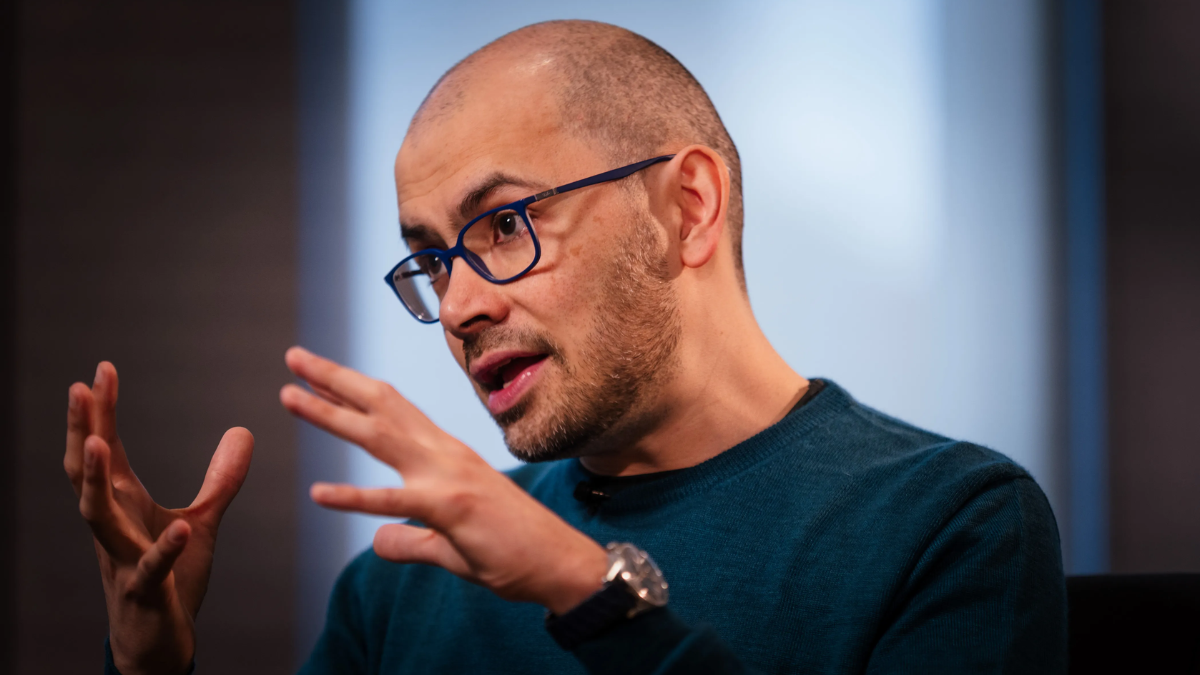


Google DeepMind CEO Demis Hassabis believes humanity is approaching a defining moment, with Artificial General Intelligence (AGI) potentially arriving within “a few short years” and urgent measures needed to ensure the technology develops in a way that benefits society.
In a personal blog post, Hassabis, a Nobel laureate and one of the leading figures in artificial intelligence research, once again warned that AGI — an advanced form of AI capable of matching or exceeding human performance across almost all cognitive tasks — is nearing reality. He described AGI as “a system that exhibits all the cognitive capabilities the brain has.” In June, Hassabis had predicted that such systems could emerge within the next 3-4 years.
The DeepMind chief called for the immediate creation of a global AI oversight body led by the United States, arguing that current efforts are focused too heavily on competition between companies and countries rather than addressing potential dangers associated with increasingly powerful AI systems.
"Urgent action is needed to address risks that might arise as we get closer to AGI. We've already seen the challenges frontier models pose for cybersecurity, and other threats including nuclear and bio risks may soon emerge as capabilities continue to advance."
Hassabis said the future trajectory of AI remains uncertain, with both extraordinary opportunities and serious risks possible. He noted that even leading researchers are unsure how advanced AI systems will evolve.
"On the horizon, we will need robust safeguards to maintain control of increasingly agentic, recursively self-improving systems - and tackle unknown issues that will only become clearer over time."
Concerns about AI systems improving themselves and producing more capable successors without direct human involvement have also been highlighted in research by Anthropic, the AI company behind Claude. Anthropic, led by Dario Amodei, has repeatedly warned about AI risks while acknowledging that researchers still do not fully understand the internal workings of these models. Amodei has also advocated stronger regulations and safety measures for AI development.
"I'm confident that mitigating the technical risks related to AI is a challenge we can collectively address, but only if we give ourselves the time and space to get this next crucial step right. Currently, as a field and as a wider society, we aren't doing that," Hassabis said.
Hassabis proposed creating an AI regulatory organisation inspired by the Financial Industry Regulatory Authority (FINRA), the private body that oversees Wall Street brokerage firms under federal supervision.
According to his proposal, the organisation would include leading technical experts, receive most of its funding from the AI industry and establish safety benchmarks that advanced AI models would have to meet before being released publicly.
Under the proposed framework, AI companies would initially submit their most powerful systems for voluntary safety reviews up to 30 days before launch. Once the process becomes established and reliable, compliance could become compulsory.
"Nobody in the world knows for sure what is going to happen from here, and even the experts disagree," Hassabis said.
"When there is a large degree of uncertainty and the stakes are this high, proceeding with cautious optimism is the sensible and correct strategy."
Hassabis said the US is in a strong position to lead the creation of such a system because of its technological and economic influence. He suggested that a framework initiated by Washington could serve as the foundation for international standards governing Frontier AI, the term used for the most advanced general-purpose AI models available at any given time.
"Since this technology is going to affect the entire planet, ideally this framework would spur the international community to reach a consensus on how to manage the most serious risks while ensuring everyone has access to and can benefit from the opportunities that AI brings," Hassabis said.
While acknowledging that both optimism and uncertainty surrounding AI are justified, Hassabis stressed that humanity still has an opportunity to influence the direction of the technology.
"But the future is not yet written, we must use this precious window before AGI arrives to shape this technology for the benefit of all humanity."
He said the choices made collectively today will determine the course of the next stage of civilisation.
"By safely stewarding AGI into the world, we can enter a new golden age of scientific discovery and progress, and usher in a bright future of incredible human flourishing."
Hassabis described the current period as nothing less than a historic transition.
"Nothing less than the dawning of a new age for humanity," is how Hassabis describes the juncture humanity finds itself in at the moment.
Having spent his “whole life” working towards AGI, the Google AI executive said he believes that, if developed and deployed responsibly, the technology could become “one of the most beneficial and transformative technologies ever invented.”
According to Hassabis, AGI represents a breakthrough unlike previous technological revolutions, including the internet and mobile technology.
"It is much more akin to the discovery of electricity or fire. If you stop to think about it, we've essentially found a way to make sand think. It's miraculous."
The reference to sand relates to computer chips, or semiconductors, which are primarily made from silicon derived from silica found in sand.
"The magnitude of this technology's impact will be unprecedented, perhaps 10x of the Industrial Revolution at 10x the speed."
Hassabis said AGI could help address some of the world's biggest challenges, from speeding up drug discovery and developing clean energy solutions to creating advanced materials. He added that AI could eventually help create a future where limited resources no longer restrict human progress.
"We could even reach a point where resources are no longer the limiting factor for human progress, leading to an amazing new era of abundance."
SpaceXAI founder Elon Musk has expressed similar views about the potential impact of advanced artificial intelligence in the past.
Also Read | 'We're taking lessons from you': PM lauds Australia's under-16 social media ban