

The Indian Air Force (IAF) has once again been ranked as the world’s third-most powerful air arm in the latest global airpower assessment released by the World Directory of Modern Military Aircraft (WDMMA), retaining its position ahead of China’s People’s Liberation Army Air Force (PLAAF) for the fifth consecutive evaluation since 2022.
The WDMMA’s 2026 rankings place only the United States and Russia above the IAF, reinforcing India’s status as one of the world’s leading military aviation powers.
The annual study assesses 129 air services across 103 countries and examines more than 48,000 military aircraft worldwide. Instead of relying solely on fleet size, the rankings are derived from WDMMA’s proprietary True Value Rating (TVR) system, which considers factors including fleet composition, technological capability, logistical support, modernisation, and overall operational effectiveness.
The latest assessment marks yet another year in which the Indian Air Force has been rated ahead of its Chinese counterpart. According to reports, this is the sixth time overall that the IAF has secured the third position globally, behind only the United States and Russia.
Unlike traditional airpower rankings that place greater emphasis on the number of fighter aircraft, the WDMMA framework gives considerable importance to the diversity and balance of an air force’s inventory. Assets such as aerial refuelling tankers, airborne early-warning aircraft, transport fleets, trainer aircraft, intelligence-gathering platforms and close-air-support aircraft are all assigned significant weight in determining the final ranking.
The evaluation also takes into account future procurement plans and the strength of a nation's domestic aerospace industry.
According to the report, the Indian Air Force currently operates 1,716 aircraft. Its combat fleet includes 542 fighter aircraft representing seven different types, a figure that continues to include the MiG-21 despite the aircraft's retirement in September 2025.
The IAF's helicopter fleet stands at 498 aircraft, comprising 222 Mi-17 helicopters and 111 indigenously developed HAL Dhruv and Rudra platforms. It also fields 282 transport aircraft and 374 trainers, including 325 aircraft dedicated specifically to pilot training.
In addition, the service operates 20 special mission aircraft, including airborne early-warning systems, intelligence-gathering platforms and aerial refuelling aircraft that extend operational reach and improve situational awareness.
The report also analysed the structure of the United States Air Force (USAF), which retained its position as the world's most powerful air arm. Fighter aircraft account for 32 per cent of the USAF's inventory, while the inclusion of bombers and close-air-support aircraft raises the share of combat aircraft to about 41 per cent. Helicopters make up around 4 per cent of the fleet, transport aircraft account for 14 per cent, and another 14 per cent consists of special mission platforms.
Despite its strong global standing, the assessment identified several capability gaps within the Indian Air Force. The service currently operates 29 fighter squadrons, well below its sanctioned strength of 42. Its long-term force structure is based on maintaining approximately 750 fighter aircraft, assuming an average of 18 aircraft per squadron.
The report also highlighted shortages in several critical force-multiplier capabilities, including aerial refuelling tankers, airborne early-warning and control systems, electronic warfare aircraft, and Intelligence, Surveillance, Target Acquisition and Reconnaissance (ISTAR) platforms.
To bridge these gaps, the IAF is pursuing an extensive modernisation programme that combines indigenous development with foreign acquisitions.
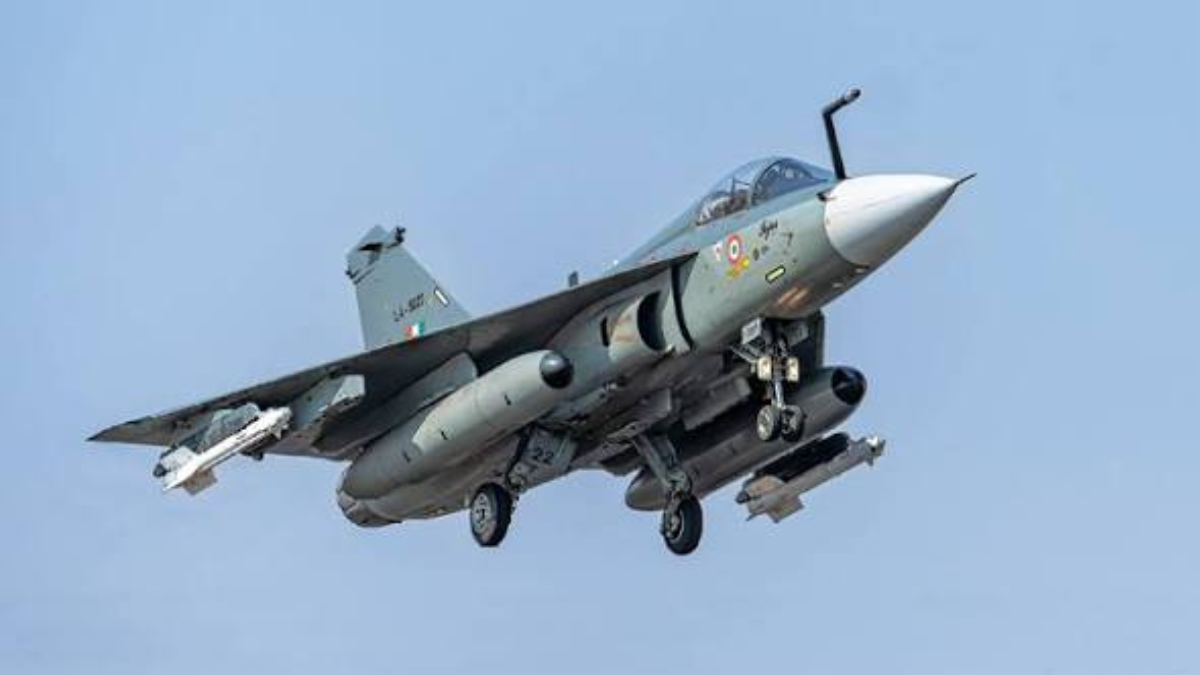
As part of this effort, the Air Force has placed orders for 180 Tejas Mk-1A fighter aircraft in two batches of 83 and 97 jets. Although these inductions are expected to strengthen squadron strength, the first aircraft are still awaiting final systems integration before entering operational service.
India is also evaluating the purchase of up to 114 additional Rafale fighter jets, a proposal that could significantly bolster combat capability while replacing ageing aircraft.
The report noted that more than 200 Jaguar, Mirage 2000 and MiG-29 fighters are expected to retire during the 2030s, making the timely induction of replacement aircraft a strategic necessity.
Alongside expanding its fighter fleet, the IAF is moving ahead with plans to procure additional airborne warning and control systems, aerial refuelling tankers and advanced ISTAR platforms to reinforce its network-centric warfare capabilities.
The latest WDMMA assessment highlights both the Indian Air Force's existing strengths and the scope of its ongoing modernisation programme as it works to preserve its operational advantage in an increasingly competitive regional security environment.